
Upper GI Cancers

Upper gastrointestinal (GI) cancers are a group of malignancies that develop in the organs of the upper digestive tract, most commonly the esophagus and stomach. These cancers often go undetected in their early stages, making awareness of symptoms and risk factors essential for timely diagnosis and treatment.

At SERO, our board-certified radiation oncologists work closely with each patient’s full care team to develop personalized treatment plans for cancers of the esophagus and stomach. We are proud to serve patients throughout the Charlotte, NC metro area and surrounding communities across the Southeast.

22.5K
New cases of esophageal cancer are diagnosed in the United States each year.
3x
Men are approximately three times more likely than women to be diagnosed with esophageal cancer over their lifetime.
31.5K
New cases of stomach cancer are diagnosed in the United States each year.
48.6%
Five-year relative survival rate for esophageal cancer diagnosed at a localized stage.

What Is Upper GI Cancer?

The upper gastrointestinal tract includes the esophagus and stomach, both of which play essential roles in moving food from the mouth to the small intestine for digestion.

Esophageal cancer begins in the esophagus, the muscular tube that carries food and liquid from the throat down to the stomach. The esophageal wall is made up of several layers, and cancer typically starts in the innermost lining before growing outward through surrounding tissue.

Stomach cancer, also called gastric cancer, develops in the lining of the stomach. The stomach is responsible for storing food, mixing it with digestive acids, and moving it into the small intestine. Cancer most often arises in the glandular cells of the stomach’s inner lining, a type called adenocarcinoma.

Both cancers share some clinical characteristics, including early symptoms that can be mild or easily mistaken for common digestive complaints.

Symptoms of Upper GI Cancers

Symptoms of upper GI cancers can be subtle in the early stages, which is why many patients are diagnosed after the disease has already progressed. Recognizing warning signs and discussing them with a physician promptly is important.

Common Symptoms of Esophageal Cancer

  • Difficulty swallowing (dysphagia), which often begins with solid foods and progresses to liquids
  • Unintentional weight loss
  • Persistent heartburn or indigestion that does not improve with treatment
  • Chest pressure or pain
  • Hoarseness or a chronic cough
  • Regurgitation of food or liquids
  • Fatigue and general weakness

Common Symptoms of Stomach Cancer

  • Persistent stomach pain or discomfort, particularly after eating
  • Feeling full after eating only a small amount of food
  • Nausea or vomiting
  • Unintentional weight loss
  • Loss of appetite
  • Blood in the stool or black, tarry stools
  • Anemia (low red blood cell count), which can cause fatigue and weakness

Many of these symptoms can be caused by non-cancerous conditions. However, if symptoms are persistent, worsening, or accompanied by unexplained weight loss, it is important to see a physician right away.

Causes and Risk Factors

The exact cause of upper GI cancers is not always known, but researchers have identified several factors that increase a person’s likelihood of developing these diseases.

Risk Factors for Esophageal Cancer

  • Gastroesophageal reflux disease (GERD): Chronic acid reflux exposes the esophageal lining to stomach acid over time, which can lead to cellular changes and is a major risk factor for adenocarcinoma of the esophagus.
  • Barrett’s esophagus: Repeated acid exposure can cause the normal lining of the lower esophagus to be replaced by tissue similar to the intestinal lining, significantly increasing the risk of esophageal adenocarcinoma.
  • Tobacco and alcohol use: Smoking is a risk factor for both primary types of esophageal cancer. Heavy alcohol use is a particularly strong risk factor for squamous cell carcinoma.
  • Obesity: Excess body weight increases the likelihood of GERD and Barrett’s esophagus and is associated with an elevated risk of adenocarcinoma.
  • Age and sex: Esophageal cancer is far more common in men and becomes more likely with advancing age, with most diagnoses occurring in people over age 55.

Risk Factors for Stomach Cancer

  • Helicobacter pylori (H. pylori) infection: Chronic infection with this bacterial organism is the single strongest known risk factor for stomach cancer, causing persistent inflammation that can lead to precancerous changes over time.
  • Diet: Diets high in salted, smoked, or preserved foods have been linked to elevated risk. Low intake of fruits and vegetables is also a contributing factor.
  • Tobacco use: Smoking increases the risk of developing stomach cancer.
  • Family history and genetics: People with a first-degree relative who has had stomach cancer are at higher risk, and certain inherited conditions such as hereditary diffuse gastric cancer syndrome substantially elevate risk.
  • Age, sex, and race/ethnicity: Risk increases with age and is more common in men. Research indicates that Black, Hispanic, and Asian populations may face a higher risk than white individuals.

Diagnosing Upper GI Cancers

When symptoms suggest a possible upper GI cancer, a physician will typically pursue a combination of endoscopy, imaging such as CT or PET scans, and a tissue biopsy to confirm the presence, type, and extent of the disease. Once a diagnosis is confirmed, cancer staging determines how far the cancer has progressed and guides treatment planning. Most patients benefit from evaluation by a multidisciplinary team that includes a gastroenterologist, surgeon, medical oncologist, and radiation oncologist.

Types of Upper GI Cancers

Esophageal Cancer

The two most common types of esophageal cancer are defined by the cell in which they originate. Adenocarcinoma develops in the glandular cells of the lower esophagus and is now the most common type diagnosed in the United States, strongly associated with GERD, Barrett’s esophagus, and obesity. Squamous cell carcinoma arises from the flat cells lining the esophagus and is most closely linked to tobacco use and heavy alcohol consumption. While squamous cell carcinoma has historically been the more common type worldwide, its incidence in the United States has declined over recent decades.

Stomach Cancer

Most stomach cancers, approximately 90 to 95 percent, are adenocarcinomas arising from the glandular cells of the stomach’s inner lining. Less common types include gastrointestinal stromal tumors (GISTs), lymphomas of the stomach, and carcinoid (neuroendocrine) tumors.

Stages of Upper GI Cancers

Both esophageal and stomach cancers are staged using the TNM system, which evaluates tumor depth, lymph node involvement, and whether the cancer has spread to distant organs. Stage at diagnosis has a strong influence on treatment options and prognosis, with earlier-stage disease generally offering a higher likelihood of curative treatment. Because symptoms of upper GI cancers are often subtle, a meaningful proportion of patients are diagnosed at a locally advanced or metastatic stage.

Upper GI Cancer Treatment

Treatment for upper GI cancers depends on the type and stage of cancer, the location of the tumor, and the patient’s overall health and preferences. A coordinated approach involving multiple specialties is typically required.

Surgery

Surgery plays an important role when the disease is localized or regionally advanced. For esophageal cancer, the primary procedure is an esophagectomy, in which part or all of the esophagus is removed and the digestive pathway is reconstructed. For stomach cancer, surgery may involve partial or total removal of the stomach depending on the location and extent of the tumor. Your care team will discuss whether surgery is appropriate and what type of procedure is the best fit for your situation.

Chemotherapy

Chemotherapy is commonly used in combination with radiation therapy or surgery for upper GI cancers. It may be given before treatment to shrink the tumor, at the same time as radiation to enhance its effectiveness, or after surgery to reduce the risk of recurrence. A medical oncologist will determine the appropriate regimen based on cancer type, stage, and overall health.

Radiation Therapy

Radiation therapy uses high-energy beams to target and destroy cancer cells. It is an important component of upper GI cancer treatment and is most often used in combination with chemotherapy, before surgery, after surgery, or as the primary treatment when surgery is not an option.

SERO physicians use advanced conformal treatment techniques, including intensity modulated radiation therapy (IMRT) and image-guided radiation therapy (IGRT), to shape radiation beams to the contour of the tumor with a high degree of precision.

How radiation is used in upper GI cancers

arrow_forward

Before surgery (neoadjuvant chemoradiation)

Radiation combined with chemotherapy may be given to shrink the tumor before an operation, improving the likelihood of complete surgical removal.

arrow_forward

After surgery (adjuvant radiation)

Radiation may be recommended after surgery, particularly for stomach cancer, to reduce the risk of local recurrence.

arrow_forward

As definitive treatment

For patients who are not surgical candidates, or for cancers of the cervical esophagus where surgery would significantly affect function, radiation combined with chemotherapy can serve as the primary curative treatment.

arrow_forward

For symptom relief (palliative radiation)

In advanced disease, radiation can help relieve symptoms such as difficulty swallowing, bleeding, or pain.

Treatment is delivered as an outpatient procedure in daily sessions, Monday through Friday, over the course of several weeks. Each session is brief and painless. In addition to radiation planning and delivery, SERO’s treatment centers offer access to nutrition support and other clinical services to help patients through treatment.

Potential Side Effects

Side effects of upper GI cancer treatment vary based on the location being treated, the specific approach used, and individual health factors. Common side effects of radiation therapy to this region may include esophagitis (inflammation of the esophageal lining that can cause swallowing difficulty), fatigue, nausea, decreased appetite, skin changes in the treated area, and changes in bowel habits. When radiation is given concurrently with chemotherapy, side effects are often more pronounced.

For patients who have difficulty maintaining adequate nutrition during treatment, a temporary feeding tube may be recommended. A registered dietitian can provide personalized guidance on eating during and after treatment.

Most acute side effects improve in the weeks following completion of treatment. Your care team will monitor you closely throughout and can recommend strategies to help manage symptoms as they arise.

Upper GI Cancer FAQs

What cancers are considered upper GI cancers?

Upper gastrointestinal cancers include cancers of the esophagus and stomach. These two cancers share similar characteristics in their symptoms, risk factors, and treatment approaches, though they differ in where they originate and how they are managed.

What is Barrett’s esophagus, and does it always lead to cancer?

Barrett’s esophagus is a condition in which the normal lining of the lower esophagus is replaced by tissue that resembles the intestinal lining, typically as a result of chronic acid reflux. While it significantly raises the risk of esophageal adenocarcinoma, most people with the condition do not develop cancer. Regular endoscopic surveillance is recommended to monitor for changes and allow early intervention if precancerous cells develop.

What is H. pylori and how is it related to stomach cancer?

Helicobacter pylori is a bacterial infection that can live in the lining of the stomach. Chronic infection causes persistent inflammation that can eventually lead to precancerous changes in the stomach lining. H. pylori is the strongest known risk factor for stomach cancer, though most people infected with it do not develop cancer. The infection is treatable with a course of antibiotics.

Is radiation therapy used as the main treatment for esophageal cancer?

For some patients, radiation therapy combined with chemotherapy (chemoradiation) serves as the primary treatment rather than surgery. This approach is most commonly used for cancers of the cervical esophagus or for patients who are not surgical candidates. For patients who do undergo surgery, radiation is often used before the operation to shrink the tumor or after surgery to reduce the risk of recurrence.

What should I expect from radiation therapy for upper GI cancer?

Radiation is delivered as an outpatient procedure, typically in daily sessions Monday through Friday over several weeks. Each treatment session is brief and painless. Before treatment begins, your radiation oncology team will perform a CT simulation scan to map the exact location of the tumor and surrounding structures. This information is used to create a customized treatment plan designed to direct radiation precisely to the cancer while protecting nearby healthy tissue.

file_downloadFree download

Skin Cancer eBook

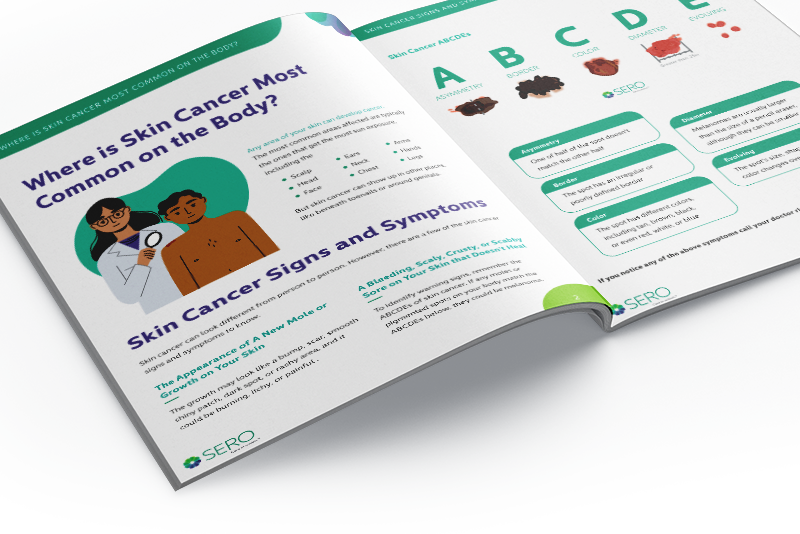
Download our guide to learn how to protect and care for your skin, monitor moles, and understand the signs of skin cancer.

Oops! We could not locate your form.